
The compound house that raised us
I keep thinking about the compound house my grandparents lived in. Three generations, one set of connected roofs, everybody underfoot. It wasn’t perfect, but it worked in a way that felt almost effortless.
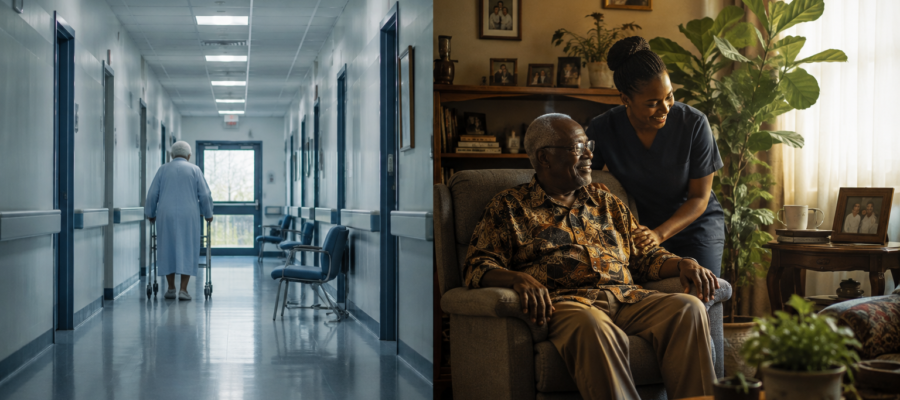
Nobody had to plan for elder care back then. The building did it for you. The old were never alone, and the kids were never out of sight. Care was simply the default. That compound house was our original elder care system, and it worked without anyone having to design it on purpose.
Where the children went
Now look at where we actually live. The children are in Accra, Kumasi, London, Toronto, often sent there by the same parents who are now aging back home, still working to keep everything running.
The compound house hasn’t vanished exactly. It’s turning into something we point to in old photographs, and the elder care system that came with it has quietly disappeared along with it.
Love without structure becomes worry
Here’s what nobody wants to say out loud. we took apart a system that worked, and what replaced it was guilt. The love is still there. I see it every single week, real, deep, oceans of it.
But love without any structure around it turns into worry. And worry, delivered down a phone line at midnight, isn’t the same thing as care.
The sacrifice we praise, the cost we ignore
We’re quick to praise the sacrifice, the child who made it abroad, the family who scraped together the money to send them. Slower, though, are we to talk about what that sacrifice quietly costs the people who stayed behind.
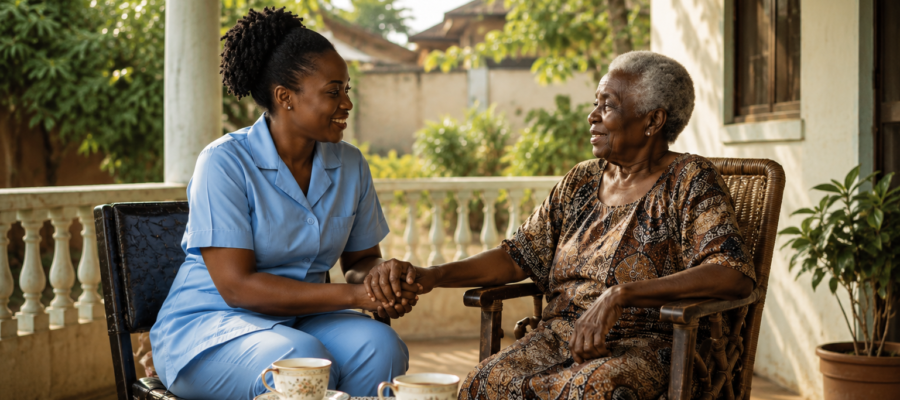
Money gets sent. Calls get made. Visits happen when the flights and the schedules line up. In the gaps between all of that, our parents wait, not because they don’t understand why we’re gone. They understand completely. They just deserve something more than an update. A real elder care system, not just good intentions.
Where the real failure lies
Let’s be honest about where the failure actually is.
Getting older isn’t a personal failure. Needing help isn’t weakness. Wanting to age somewhere familiar, near people who actually know you, isn’t asking too much.
The real failure is ours, an entire generation that inherited a working elder care system and let it fall apart without building anything to take its place. We can’t wish our way back to how things used to be. The world has changed too much for that, so we have to change with it, thoughtfully, and with a little imagination.
What replaces the elder care system our grandparents had?
It’s not a building. It’s a system. A culture of support that’s actually designed on purpose, instead of just hoped for.
Picture a new elder care system, built for the way families actually live now, spread across cities and continents, connected by phone calls instead of courtyards. A new way of saying: you spent your life raising us, now let’s build this for you.
What comes next
I’ve spent years sitting with this question, talking to families going through exactly this, learning from caregivers doing the real work, figuring out what genuinely holds up here, not what worked somewhere else.
Soon, I’m going to share what I think the answer looks like, a practical, dignified elder care system built to last. Something that brings back dignity, rebuilds connection, and makes sure no parent gets left behind.
Because love is forever. It just needs a system to stand on.